America's Enshittification of the Snail
My father died in 2024. Right before that, I was laid off from my role as a User Experience Designer at Fidelity Investments. Then, I found myself calcified by grief and unaddressed trauma. Relief came through Kundalini yoga, and unexpectedly, through animal-assisted therapy.
I had been nonchalantly studying and breeding Cornu aspersum snails when a pattern emerged for reexamining my life choices.
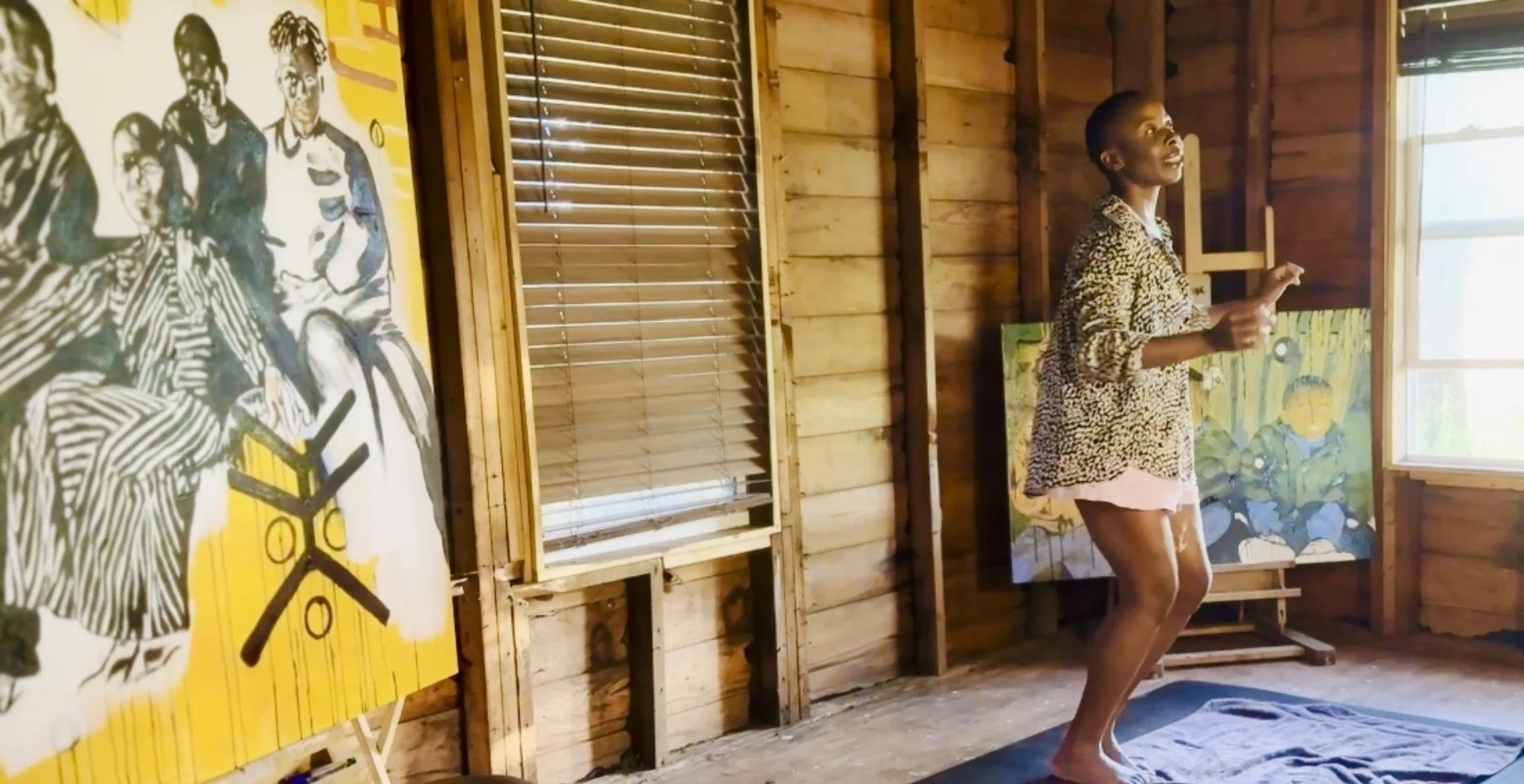
You may consider me an artist-turned-citizen-scientist.
The raising of Giant African Land Snails (GALs) is common across Nigeria (but illegal in the U.S.). We eat them both unceremoniously and with great enthusiasm. They are a clean protein, take on the simplest and most complex flavors with ease, and cost almost nothing.
When we travel back to Nigeria, we always come home with food. Uziza leaves: harvested, dried, and folded into bags. And snails: chosen carefully, stone-like shells, cracked open with a hammer, the meat washed, dried, and packaged with care.
Then, we arrive at customs and experience elementary school all over again.
The leaves: scrutinized. The officers: suspicious, frowning, poking, prodding, provoking.
We learned to stand very still and say very little.
The snails, through no fault of their own, resemble female genitalia—of all shades.
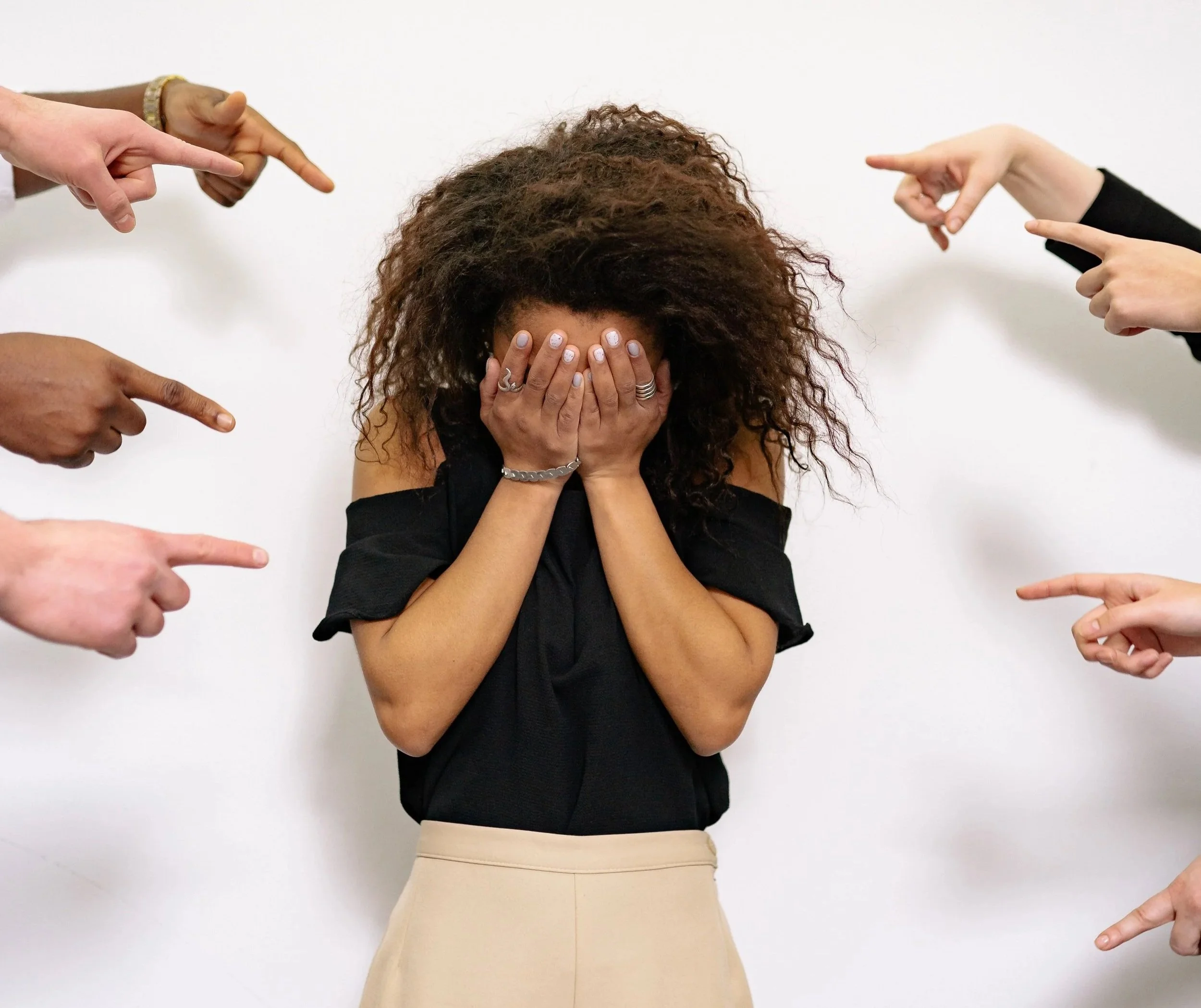
Stock image
They are gawked at, manhandled, sometimes outright snatched.
We absorbed the message, deep into our psyche: it feeds you at home, but has no place here.
And the shame of it! — hearts pounding, sweaty palms, the discomfort of the journey lingers, unaddressed.
So when tariffs tightened in 2024 and importing processed snails became even more difficult, the question at the back of my mind finally surfaced:
Why aren’t Americans farming snails instead of importing them?
On interviewing snail enthusiasts from Italian-Americans, to Korean-Americans, that familiar emotion resurfaced: shame. The instinct to make yourself smaller; hide what feeds you. In my family’s case, let’s not be the weirdo trembling in a government building, holding a bag of dry, giant, African, snails. I’m a digger so let’s follow the thread to its origin, shall we?
America’s enshittification of the snail is inherited.

Charles Woodmason
Once upon a time, Puritan moral framework treated the body as suspect, pleasure as dangerous, and foreign food traditions as primitive. Puritan forebearers migrated to New England with strict notions about food production and preparation. A colonial minister, Charles Woodmason, called Native American food “exceedingly filthy and most execrable”. This demeaning thread produced a culture uniquely hostile to an animal that is slow, soft, slick, and unapologetically sensual.
That same framework, as Frederick Kaufman documents in A Short History of the American Stomach, gave us a food culture in which the stomach’s equilibrium was a moral indicator — and what you ate was a measure of your virtue. Escargot survived in American fine dining only because it arrived laundered through French prestige — rich butter and cream, garlic, a delicate fork, a price point that signals sophistication. As one food historian put it plainly: “the honor of being a ‘delicacy’ is not rooted in any concrete, objective criteria. Food gains and loses prestige depending on who prepares it and who eats it.”
Strip away the French, and you have what Mama Ke’ukwu made with her hands: the same animal, the same protein, the same nourishment. But one version belongs on a white tablecloth. The other becomes a whisper.
Which hunger, body, and tradition is permitted to exist?
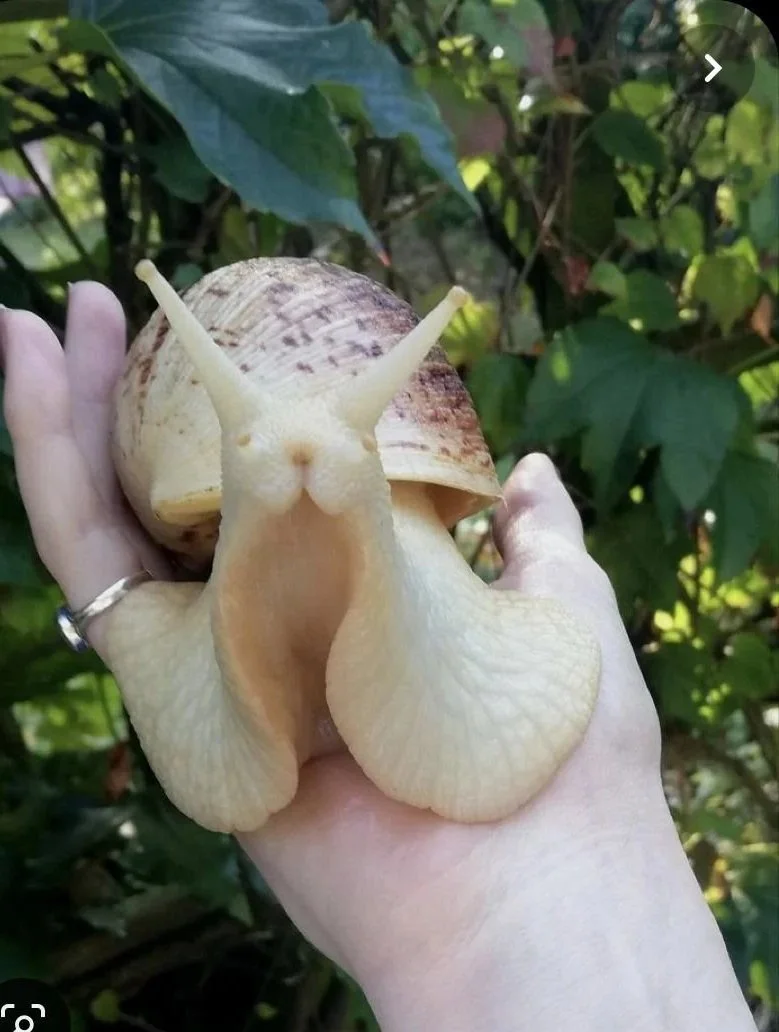
Giant African Land Snail (GALs), raised as a pet. Source: Anonymous
Evolutionary biologist, Menno Schilthuizen, who has spent decades studying land snail adaptation at Leiden University, has documented how snails evolve rapidly in response to the very human environments that seek to exclude them.
American GALs have gone underground, as taboos typically do.
In Florida alone, the U.S. government has spent over $24 million across three separate campaigns eradicating Giant African-American Land Snails (GAALs) [jk], delivered by the illegal exotic pet market. Not farming them, nor studying them as a resource, but destroying them. Every effort spent on eradication erodes the multibillion dollar, domestic, protein infrastructure this country desperately needs.
There are consequences to labeling snails strictly as pests: soil amendment is eradicated before they reach depleted fields; protein is trashed before they can feed food-insecure families; and mucin compounds are washed away before they enter wound-healing formulations. Here we are, actively dismantling a robust regenerative system while calling it pest management.
Their reproductive potential makes them an extraordinary livestock animal: hermaphroditic, exponential, requiring no refrigeration, survives weeks to months without food; sealing themselves inside their shell until conditions improve, emerging intact. Unfortunately, those are also the very arguments for their destruction. Once creatures are classified as pests, they lose their entire lineage.
The snail has fed West African communities for centuries and appears in Roman culinary records. Currently, they are generating billions across global food, cosmetics, pharmaceutical, and biofertilizer markets. However, when they cross an invisible line into American soil, they become, singularly, a threat.
In a world facing simultaneous food, fuel, and fertilizer shortages, with famine spreading and soil depletion accelerating globally, the snail may be the most important livestock of the century.
Mind relatively at ease, I've pivoted to developing EscarGrow (patent pending) — a sealed, APHIS-compliant, farming system designed to teach regenerative heliciculture (snail farming).
The current ways are costing us a brilliant future. Today, we need to reckon with shame.
