
Three Years Before the 1st Bag
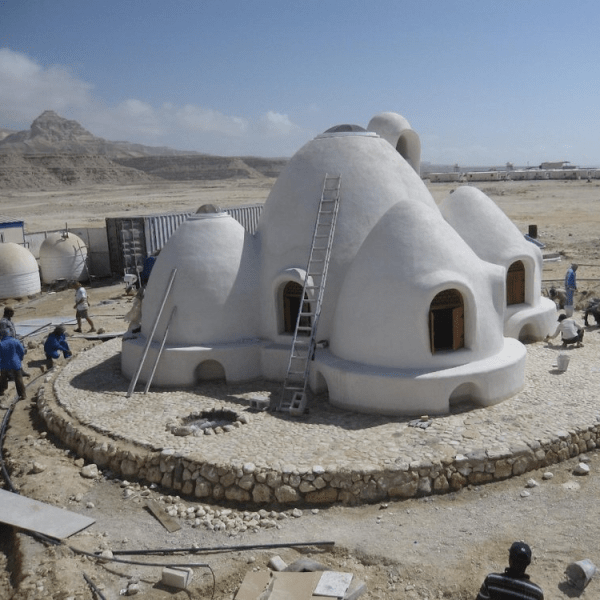
Inspiration: Cal-Earth natural building
The first time I walk the full perimeter of the land, I do not pull out a measuring tape. I watch where the water went. I’ve spotted dinosaur tracks. I’ve learned that raccoons can’t jump (ask me how I found out). Opossums are creepy. Period.
Observation is a permaculture instinct. It is also the instinct of someone who has been burned by moving too fast. Before you impose a plan on a piece of land, you learn what the land already wants to do. Where does it drain in a hard rain? Where does it hold moisture three days later? Which corners stay cool in August? Where do the earthworms concentrate? Which trees are the birds using, and what does that tell you about insect activity? You can read a piece of land the way you read a person, if you slow down enough to look.
For three years, we were moving at the speed of Cornu aspersa — the garden snail that most of Texas has ignored for decades.
I did not start with a business plan. I started with a question: what does this creature actually do?
What I found was a system so efficient it embarrassed conventional agriculture. Snails convert organic waste into high-protein biomass at a fraction of the water cost of any livestock. Their mucin (the same bioactive compound that drives a billion-dollar cosmetic industry) produced in direct response to environmental and dietary stress, which means you can influence it. They do not fight gravity. They do not waste movement. They live in and on the soil, returning nutrients as they go.
I spent months observing before we intervened. I tracked movement patterns at different times of day and season. I noted which plants they grazed and in what sequence. I watched how they responded to soil moisture, temperature, and substrate composition.
By the time I was ready to design the EscarGrow system, we understood what we were designing for. That is a different starting point than most agricultural technology begins from.
While the snail research was developing, so was the architecture problem.
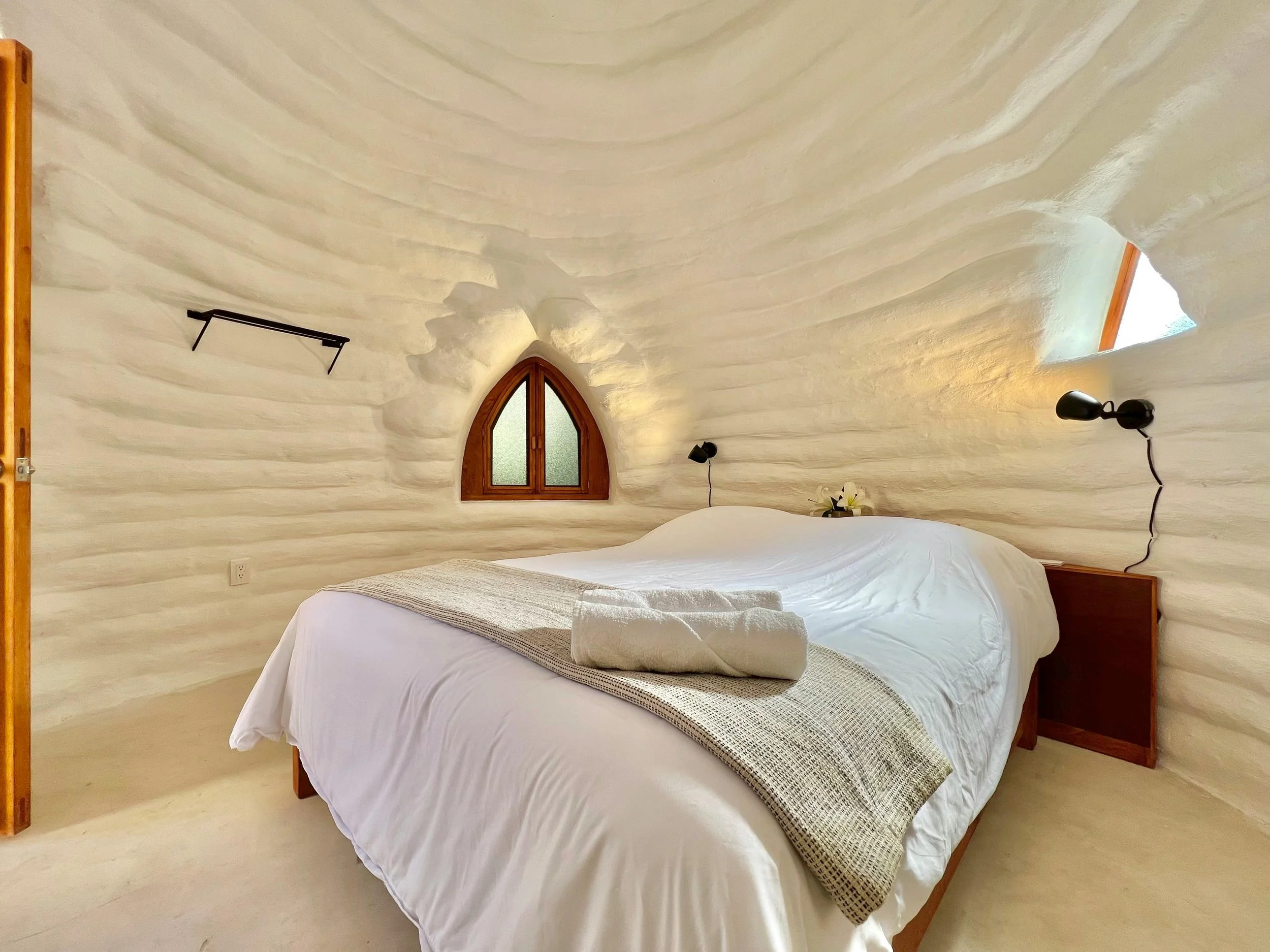
A regenerative farm needs structures. Structures to shelter animals through Texas winters that can kill a snail colony overnight. Structures to store harvest, process product, receive visitors, and eventually house the community members who will help sustain the operation. We prepared to build.
I drew the first plans in 2023 and listed them for sale. They were wrong in several specific ways — namely the over-reliance on wood. I drew them again.
We considered cob — beautiful, thermally excellent, but labor-intensive past a certain scale in Texas heat, and vulnerable to our moisture swings. We looked at strawbale — superb insulation, limited by the moisture exposure our climate demands. Shipping containers were discussed, evaluated, and set aside: too expensive to modify properly, wrong thermal profile, and architecturally at odds with a regenerative farm that is trying to demonstrate something other than industrial aesthetic.
Conventional framing was the option most people would have chosen. In reality, it is the option that makes the least sense. You see, wood framing in Texas' temperature swings is a long-term maintenance problem; I don’t want to build twice. It requires supply chains, specialized labor, and materials that will cost more every year the grid becomes more unstable.
We needed a building system made from what is already here.
Texas soil is a gift to natural builders. Clay-heavy, compactable, locally abundant. The hyperadobe method (raschel mesh tubes packed tight with earth, stacked and compressed into monolithic walls) turns the land itself into the structure. Materials that travel more than a few feet from where it is dug.
The walls have thermal mass that handles temperature swings that would crack drywall. The rounded geometry deflects wind rather than fighting it. The earthen surface breathes without rotting. When a repair is needed, it is made with the same material that built the wall in the first place.
It took six months of climate analysis and three full iterations of the floor plan to get the design right. We accounted for solar angle, prevailing wind, drainage, the snailery siting, and future expansion. We are almost done deliberating.
Before we build, we are looking for two kinds of partners.
The first: experienced natural building instructors who want to bring a hyperadobe workshop to Hood County. The model is a trade — you bring the curriculum and the students, MKH provides the site, the soil, and the materials. Workshop fees are yours. The finished structure stays on the farm as part of a 501(c)(3) educational system that is supported by The Christopher Reynolds Foundation and nominated for the 2026 EarthShot Prize. If you have been looking for a site with a story, this is it.
The second: people who want to participate. Whether you come for a weekend workshop, a season of hands-on stewardship, or a deeper long-term role — HHH is building a community of people who want to learn by doing. Natural building. Animal husbandry. Regenerative agriculture. Somatic wellness practice.
Three years of research produced a design. The design produced a plan. The plan produced this decisive phase of readiness.
